About Pillar Guided Moving Plattern Hydropneumatic Press
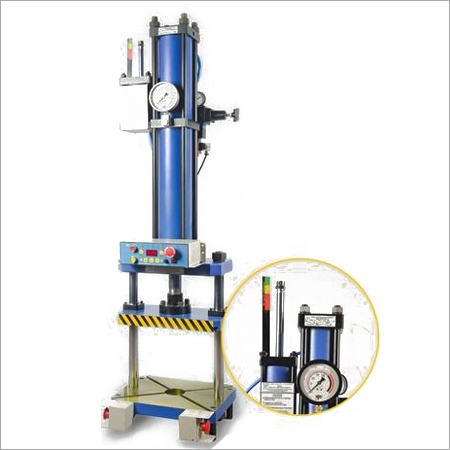
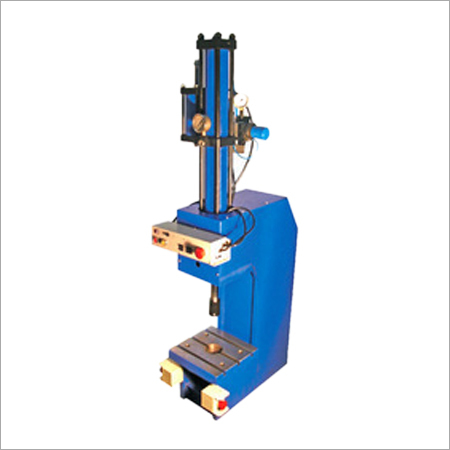
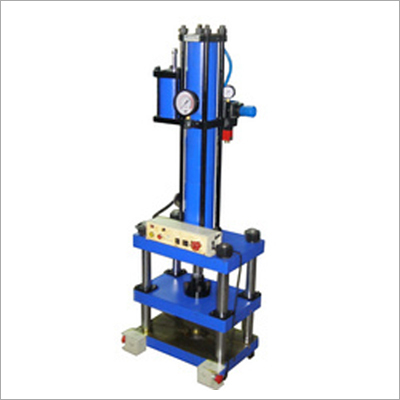
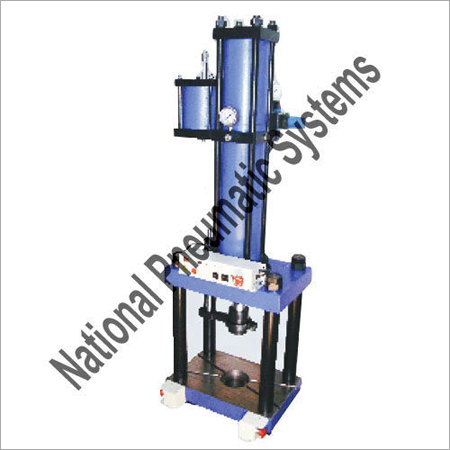
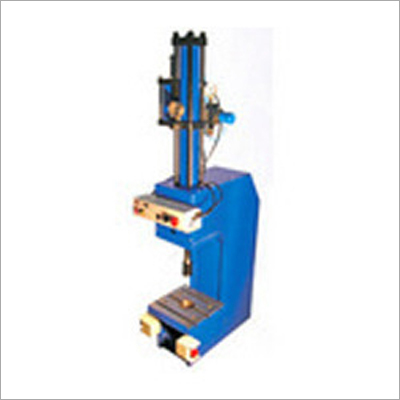
We have received wide acknowledgment as a renowned manufacturer, exporter, supplier and trader of Two Pillar Guided Moving Plattern Hydropneumatic Press. This specific machine has a vital role in punching, embossing, straightening and stamping works. Made from best quality iron, steel and alloy, the Two Pillar Guided Moving Plattern Hydropneumatic Press is equipped with remarkable features like its well built structure, easy mode of operation, simple formation, minimum deflection and low maintenance cost. Our sincerity and dedication towards our clients have enabled us to enlist the name of some of the industry bigwigs in our clients' list.
Efficient and Customizable OperationThis hydropneumatic press delivers adaptable solutions for a variety of forming, punching, and deep drawing needs. With a customizable working table size and nominal force range, it meets the demands of different industries. The pillar-guided moving plattern ensures precise movement, vital for complex operations.
Advanced Safety and User ControlSafety is enhanced by an integrated light curtain, mechanical lock, and emergency stop on the control panel. Users can easily switch between manual and automatic operation modes, providing flexibility on the production floor while maintaining comprehensive protection for operators.
Integrated Automation and Precise ControlEquipped with a PLC system, proportional valve, and both analog and digital pressure gauge options, this press enables consistent and accurate process control. Its semi-automatic or fully automatic configuration streamlines workflow, minimizes manual input, and increases productivity.
FAQs of Pillar Guided Moving Plattern Hydropneumatic Press:
Q: How is the precision of the moving plattern ensured during operation?
A: The precision of the moving plattern is ensured by the pillar-guided system, which maintains alignment and stability throughout the stroke. This robust construction, combined with high-quality steel fabrication, reduces deflection and guarantees repeatable results during forming, punching, and deep drawing processes.
Q: What applications are suitable for this hydropneumatic press?
A: This press is ideal for forming, punching, deep drawing, and assembly operations across automotive, electrical, appliance, and general manufacturing industries. Its customizable force and table dimensions enable adaptation to a broad range of high-precision, high-reliability tasks.
Q: When should I use the manual mode versus the automatic mode?
A: Manual mode is recommended for setup, adjustment, or low-volume production where close monitoring is necessary. Automatic mode enhances efficiency during repetitive or large-scale production, enabling faster cycle times and consistent output. The operation mode can be easily selected via the user-friendly control panel.
Q: Where can this press be installed, and what are the electrical requirements?
A: This press is designed for installation in industrial facilities with available power sources of 220V or 380V, 50Hz. Its compact dimensions (1200 x 900 x 2200 mm, depending on capacity) allow integration into various factory layouts. Ensure adequate flooring strength and safety clearances before installation.
Q: What safety features are integrated into this press?
A: The press includes a light curtain for operator protection, a mechanical lock for secure operation, and an emergency stop on the control panel. These features are designed to safeguard users during both manual and automatic operation modes, meeting rigorous industry safety standards.
Q: How does the proportional valve improve process control?
A: The proportional valve allows precise regulation of hydraulic pressure, ensuring accurate force delivery and smooth operation. This is especially beneficial during sensitive tasks such as deep drawing or working with delicate materials, as it helps prevent material deformation and improves product consistency.
Q: What are the primary benefits of using a hydropneumatic press with a PLC system?
A: Incorporating a PLC system enhances automation, process reliability, and user interface. It allows for programmable operation cycles, data logging, and error diagnostics, reducing downtime and optimizing productivity. Combined with semi-automatic or automatic operation, it ensures both high throughput and consistent quality.




 Send Inquiry


 Send Inquiry